The numbers people come here for
| Question | Short answer | The caveat |
|---|---|---|
| Caffeine, per 2 g bowl | ≈ 60–70 mg | Varies widely by harvest and how much powder you use. |
| Caffeine, drip coffee (240 ml) | ≈ 95 mg | Also varies. Matcha is not "caffeine-free." |
| Why it feels calmer | L-theanine | An amino acid concentrated by shade-growing. Studied, not magic. |
| "Ceremonial grade" | Not a standard | No regulator defines it. It is a marketing word. |
| Shelf life, opened | 4–8 weeks | Air and light are what kill it. Keep it cold and sealed. |
Our rule here. We do not tell you matcha cures things. We show you what has been studied, link to it, and say plainly where the evidence is thin. Nothing on this site is medical advice — for questions about caffeine, medication or pregnancy, ask a doctor.
Shade is the whole trick
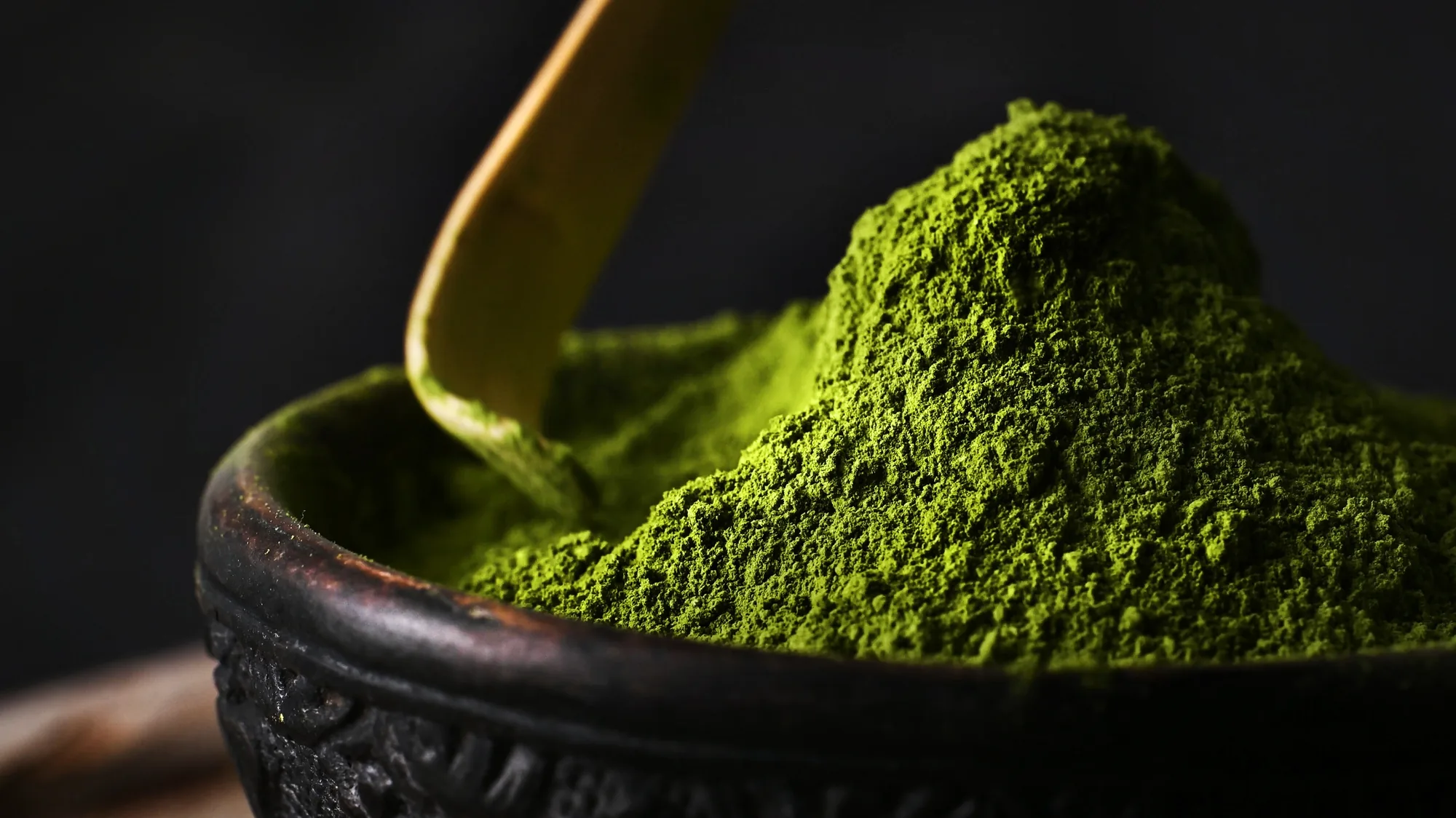
For roughly three weeks before harvest, the plants are covered. Starved of light, the leaf makes more chlorophyll — which is why the colour is so violently green — and holds on to more of the amino acids it would otherwise convert into the bitter compounds of a sunlit leaf. That is where the sweetness comes from, and the L-theanine with it. A pale, yellowish matcha usually means less shade, an older leaf, or both.
"Ceremonial grade" is not a grade
No regulator, in Japan or anywhere else, defines the term. A producer can print it on any tin. What actually predicts quality is duller and more useful: colour (vivid, not olive), origin (Uji, Nishio, Yame, Kagoshima), harvest (first flush), and price per gram. We are writing the long version of this. It will not be flattering.
Coming next
- Does matcha have caffeine? Matcha and coffee, compared
- Why matcha feels different: L-theanine, explained
- What does matcha taste like — and how to fix bitterness