The Tools — Buyer's guide
The best matcha bowls: read the kiln, then the shape
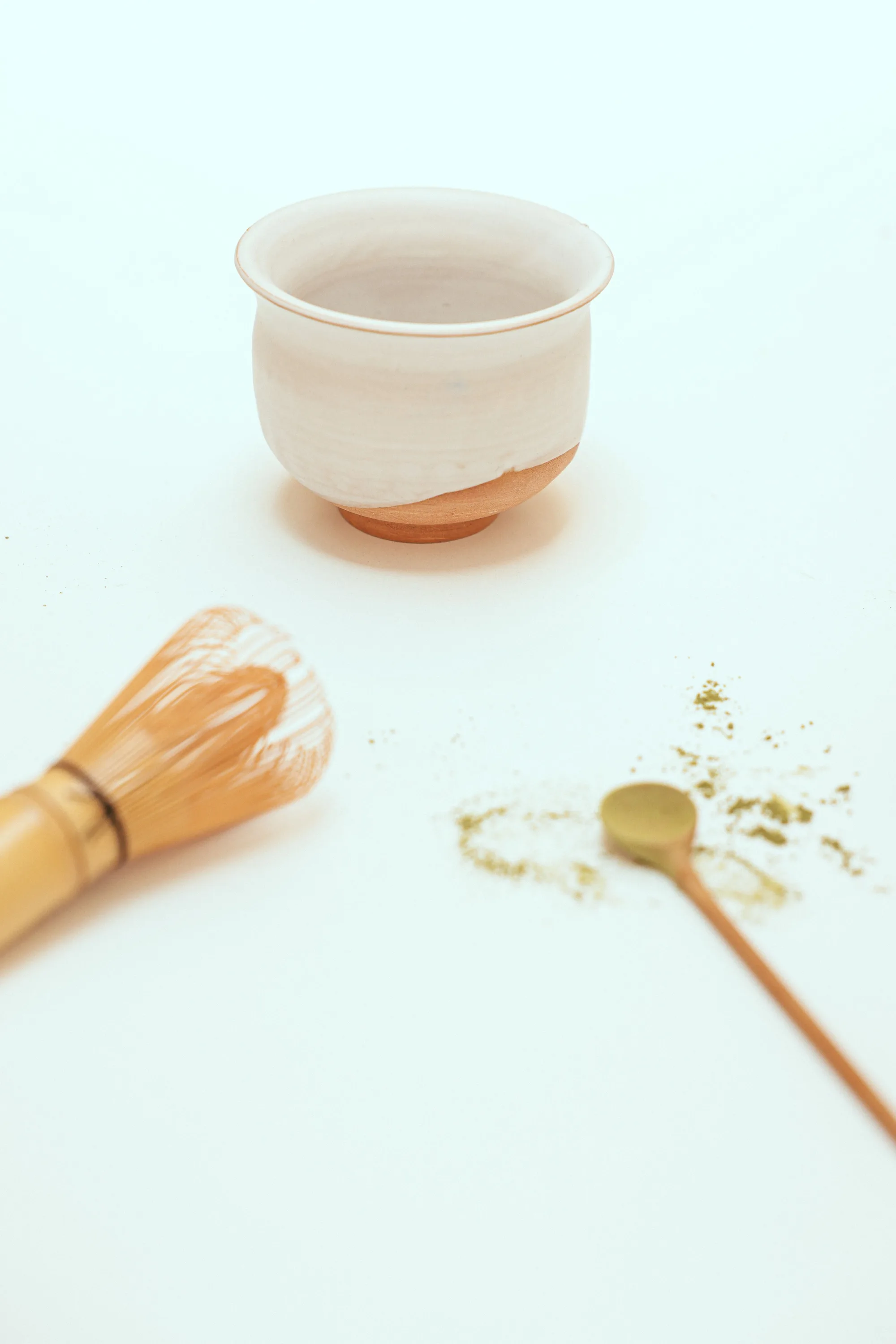
A whisk has no substitute; a bowl has many. A cereal bowl makes matcha. What a chawan adds is the geometry the whisk was designed for — a wide, rounded interior with room for a W stroke, a well at the bottom where the last of the tea gathers, a foot that holds still in one hand, a rim that drinks cleanly — and, for the bowls worth keeping, a kiln with a name. This page is what to read on a bowl listing, which districts make what, when a spout is the right answer, and how to choose one you will still be using in ten years.
This Matcha Life is reader-supported. When you buy through links on this site we may earn a commission, at no extra cost to you. We choose what to cover before we look at what it pays. This page contains no affiliate links.
In short
- A matcha bowl is defined by geometry: a wide, rounded interior about a palm across, a well at the bottom, a stable foot and a rim you drink from. Traditional bowls hold roughly 350–400 ml and are used a third full.
- What separates bowls is the kiln district — Mino (Gifu) for everyday bowls, Kyoto and Kiyomizu ware, Raku (hand-molded, low-fired, black or red), Asahi-yaki in Uji, Hasami porcelain — and whether the seller names it.
- Spouted bowls (katakuchi) are latte tools for pouring paste into milk; they run larger and shallower and are the wrong shape for a fine usucha foam.
Which matcha bowl is best? The short answer
A first bowl is a rounded, all-purpose chawan about a palm across — 11–13 cm — from a named kiln district, without a spout, that you can hold in one hand and drink from. Mino ware from Gifu is the everyday answer and the one most Japanese houses put in their starter kits. If you make lattes, a spouted bowl is a second bowl, not a substitute. Read the listing for the district and the care instruction; a bowl that names neither is a bowl from anywhere.
What a bowl has to do
The whisk decides the foam; the bowl decides whether the whisk can work. Four parts matter.
The interior (mikomi). Wide and rounded, so the tines can sweep a W across the middle without hitting the walls and can reach into the curve at the bottom. A bowl with sharp inner corners leaves powder unmixed in them.
The well (chadamari). A slight depression at the bottom where the last of the tea gathers, so the final sip is not a scraping.
The foot (kodai). A ring foot that sits flat and lets the bowl be held from beneath without burning the hand; the bowl should not rock while whisking.
The rim (kuchi). Slightly inward-turning or straight, comfortable to drink from, thin enough not to feel like a flowerpot. Bowls made for drinking have a “front,” the side presented to a guest; at home it is the side you like.
A traditional chawan holds roughly 350–400 ml and is used about a third full: 2 g of matcha in 60–70 ml. The empty space is not waste; it is what lets the whisk move fast and the foam form.
Shapes, and the season
Japanese bowls come in shapes with names, and the names are practical.
| Shape | Character | When |
|---|---|---|
| Ido / wan-nari (deep, rounded) | The all-rounder; a rounded interior, moderate height | Any season; the first bowl |
| Tsutsu (tall, narrow) | Keeps tea hot; less room for the whisk | Winter |
| Hira (wide, shallow) | Cools tea; a broad surface for foam | Summer |
| Tenmoku (conical, on a stand) | Formal; for thick tea in a gathering | Rarely at home |
| Katakuchi (with a spout) | Pours a paste into milk or ice | Lattes; a second bowl |
Names are the traditional ones; sellers often describe the same shapes as "classic," "wide" or "tall."
The districts
Most bowls sold to matcha drinkers come from a handful of pottery districts, and the district is the most useful thing a listing can state.
Mino ware (Mino-yaki), Gifu Prefecture. The everyday standard and about half of all Japanese pottery; a ceramic tradition running back to the eleventh century, with famous glazes — Shino, Oribe, Ki-Seto, Setoguro — as well as plain modern stoneware. Mino bowls are what Ippodo, Tezumi and most Japanese houses put in their starter sets, and what a good tea shop sells as a first bowl. Handmade Mino bowls are usually sold hand-wash only; a typical one is about 12.5 cm across and 7.5 cm tall.
Kyo-yaki and Kiyomizu-yaki, Kyoto. Refined, often hand-painted with seasonal motifs, from the kilns around Kiyomizu temple. The bowls of the tea schools’ home city; priced above Mino and treated gently.
Raku, Kyoto. Hand-molded rather than thrown, fired at low temperature, porous and light, in black or red — the bowl Sen no Rikyu chose, because its dark glaze shows the green and its soft body warms in the hand. Raku is delicate: it should not be soaked, heated hard, or put in a dishwasher, and it is the bowl for the person who has already fallen for the ritual.
Asahi-yaki, Uji. The Asahi kiln has made tea bowls in Uji for some four hundred years, with signature glazes — the mottled “deer-back” and a newer pale blue — and the Uji houses’ custom. A bowl from the matcha capital, for people who want the tea and the vessel from the same town.
Hasami, Nagasaki. Porcelain: thin, hard, durable, often modern in design, and the district most likely to sell a bowl as dishwasher- and microwave-safe. A good answer for a daily bowl that lives in a busy kitchen.
Shigaraki, Banko, Kutani and others. Shigaraki (Shiga) for rustic stoneware; Banko (Mie) for iron-rich clay that holds heat; Kutani (Ishikawa) for painted porcelain. Each appears on some sellers’ shelves, and each is a name worth reading.
Unnamed. Most marketplace bowls — the 15–19 ounce spouted bowls in sets — name no district and no kiln. They are usually stoneware from wherever, often dishwasher-safe, sometimes “handmade” in the sense that every bowl is, and fine for lattes. They are not what the word chawan means, and a listing that says only “Japanese-style” is telling you that.
The spout question
The spouted bowl has taken over the marketplace sets because most of their buyers make lattes, and for that use it is genuinely better: whisk 2–3 g into a paste, pour it into milk or over ice without a drip. It is also usually larger — 15 to 19 ounces — and shallower, which is the wrong geometry for a fine usucha foam on 60 ml of tea, and it is not drunk from. If you make both, own both; if you make only lattes, the spouted bowl is the first bowl; if you make the plain whisked bowl, choose a traditional shape and pour your latte paste from it carefully, or use a small jug.
What sellers disclose
| Bowl, as sold | District stated | Size stated | Care stated | Spout |
|---|---|---|---|---|
| Ippodo starter-kit chawan | Made in Japan; hakeme brushstroke, cream glaze | For a bowl of matcha | Dishwasher-safe | No |
| Tezumi starter-set chawan | Mino ware, Gifu | — | — | No |
| A Japanese tea retailer’s handmade Mino bowl | Mino ware, Gifu; handmade | 12.5 × 7.5 cm | Hand-wash only | No |
| Jade Leaf porcelain bowl | — (porcelain; handmade stated) | 18 oz, about 5 in wide, 3 in tall | Dishwasher-safe; not microwave | Yes |
| Naoki ceramic chawan | — (handmade stated) | 18 oz | — | Yes |
| Typical marketplace set bowl | — | 15–19 oz | Often dishwasher-safe | Yes |
Sources: sellers' product pages, September 2026. A dash means the page does not state it. Ounce sizes are capacities; a traditional bowl of 350–400 ml is about 12–14 oz.
Two patterns. The bowls that state a district are the bowls from Japanese houses and specialist tea retailers, and they are traditional shapes without spouts. The bowls that state a capacity in ounces and a dishwasher rating are the latte bowls, and they state no district. Neither is wrong; they are different objects for different drinks.
How to read a listing
- A district or a kiln. Mino, Kiyomizu, Raku, Asahi, Hasami, Shigaraki — or a potter’s name. Absent, assume unnamed stoneware.
- The shape. Rounded and deep for the bowl; tall for winter; shallow for summer; spouted for lattes.
- The size. 11–13 cm across, 6–8 cm tall, roughly 350–400 ml, for a drinking bowl. Capacities of 15 oz and up are latte bowls.
- The care line. Hand-wash only means a handmade or low-fired bowl; dishwasher-safe means porcelain or production stoneware. Both are honest; the absence of a line is not.
- The words that mean nothing. “Handmade,” “authentic,” “traditional,” “ceremonial.” Every bowl is handmade by someone; the kiln is the information.
Choosing, by the bowl you make
| You make | Choose | Why |
|---|---|---|
| Usucha, daily | A rounded Mino bowl, 12 cm, no spout | The standard; forgiving; a real kiln district |
| Usucha, and you care about the vessel | Kyoto, Raku or Asahi ware | The bowls the tea schools and the Uji houses use; treat gently |
| A daily bowl in a busy kitchen | Hasami porcelain | Durable, thin, dishwasher-safe |
| Lattes | A spouted bowl, 15–18 oz | Pours cleanly; the marketplace sets’ default |
| Both | A Mino bowl and a spouted one | Two objects; the bowl outlasts every whisk |
Caring for a bowl
Rinse after use; a soft cloth if needed; no abrasive pads on a glaze. Hand-wash anything handmade or low-fired, and never soak Raku. Dry fully before stacking. A crack in the glaze is character; a crack through the body will leak and retires the bowl to a plant. Warm the bowl with hot water before each use — it keeps the tea at temperature and gives the whisk a minute to soften — and it will, in a good bowl, take on a faint tea tint over years that no one has ever regretted.
Numbers at a glance
- Size: about 11–13 cm across, 6–8 cm tall, 350–400 ml; used a third full (2 g in 60–70 ml).
- Districts: Mino (about half of Japanese pottery; the starter-set standard), Kyoto/Kiyomizu, Raku (hand-molded, low-fired), Asahi-yaki (Uji, about 400 years), Hasami (porcelain), Shigaraki, Banko, Kutani.
- Spouted bowls: 15–19 oz; for lattes; not for the drunk-from bowl.
- Care: handmade and Raku, hand-wash only; porcelain and production stoneware, often dishwasher-safe — the listing should say which.
- The first bowl: a rounded Mino chawan without a spout; the cereal bowl until then.
Sources
- Ippodo Tea — official site — Ippodo Tea
- Tezumi — official site — Tezumi
Questions people actually ask
What size should a matcha bowl be?
About a palm's width across — roughly 11–13 cm — and 6–8 cm tall, holding around 350–400 ml. A standard usucha is 2 g in 60–70 ml, so the bowl is used about a third full; the empty space is for the whisk to move and the foam to form.
Do I need a special bowl for matcha?
For the first month, no; a wide cereal bowl works. A chawan earns its place with a rounded interior that lets the whisk pass every corner, a well that gathers the last sips, a foot that keeps it still, and a rim that drinks cleanly — and with the pleasure of a bowl made for the purpose.
What is a matcha bowl with a spout?
A katakuchi chawan, a bowl with a pouring lip, made for whisking a matcha paste and pouring it into milk or over ice without dripping. Most marketplace sets now include one. It is a latte tool; for a whisked bowl drunk from the rim, a traditional shape foams better.
Which Japanese pottery is best for matcha bowls?
There is no best; there are districts with characters. Mino ware from Gifu is the everyday standard and about half of Japan's pottery. Kyo-yaki and Kiyomizu ware from Kyoto are refined and often hand-painted. Raku, the tea master Rikyu's choice, is hand-molded, low-fired, porous and warm to hold. Asahi-yaki has made bowls in Uji for four hundred years. Hasami is durable porcelain, often dishwasher-safe.
Can a matcha bowl go in the dishwasher?
Depends on the bowl, and the seller should say. Porcelain and mass-produced stoneware often can; handmade Mino, Raku and Kyoto bowls generally should not, and sellers of those state hand-wash only. Raku in particular is porous and low-fired and dislikes soaking, heat and detergent.
Why do matcha bowls have different shapes?
Season and use. Tall, narrow tsutsu bowls keep tea hot in winter; wide, shallow hira bowls cool it in summer; the deep, rounded ido shape is the all-rounder; tenmoku bowls sit on a stand for formal thick tea. At home, a rounded all-rounder is the first bowl.
Read next