The Matcha — Compared
Hojicha vs matcha
They sit next to each other in every Kyoto tea shop and could hardly be more different. Hojicha is green tea roasted over high heat until it is the color of toast and smells like it. Matcha is green tea kept as green as possible, shaded, steamed and ground. One is the evening tea of Japanese homes; the other is the morning bowl. This page is the two of them side by side, from the field to the last cup of the day.
This Matcha Life is reader-supported. When you buy through links on this site we may earn a commission, at no extra cost to you. We choose what to cover before we look at what it pays. This page contains no affiliate links.
In short
- Hojicha is roasted green tea — brown, toasty, low in bitterness, steeped; matcha is shaded green tea ground and whisked whole.
- A 2 g bowl of matcha carries about 64 mg caffeine; a cup of hojicha, an infusion of older roasted leaf, far less.
- Matcha is the morning bowl; hojicha is the evening pot. They do not compete.
What is the difference between hojicha and matcha? The short answer
Hojicha is roasted green tea, brown in the cup, low in bitterness, tasting of toast and caramel, usually steeped and usually drunk in the evening. Matcha is shaded green tea ground to a powder and whisked whole into water, bright green, thick and savory, and concentrated: a 2 g bowl carries about 64 mg of caffeine, where a cup of hojicha, an infusion of often older leaf, carries far less. They are the two ends of the Japanese tea day, and the reason they sit together in every shop is that they do not compete.
One plant, two directions
Both begin as Camellia sinensis, steamed within hours of picking so the leaf stays green rather than oxidizing brown. From there they go opposite ways. Matcha’s leaf was shaded for weeks before harvest, picked in spring, dried flat without rolling into tencha, stripped of stems and veins, and ground to a powder of a few microns; every step tries to keep the leaf green and sweet. Hojicha’s leaf is usually the opposite end of the plant’s year — bancha, the coarser later-season leaf, or kukicha, the stems, or sometimes sencha — and it is finished by doing the one thing matcha’s makers avoid at all costs: heating it hard. Roasting at high temperature turns the leaf reddish brown, drives off the grassy and astringent notes, and produces the toasty, nutty aroma that is the whole point.
The origin is modern. By the usual account, hojicha as a named product dates to Kyoto in the early twentieth century — the 1920s is the year most often given — when tea merchants looking for a use for surplus and lower-grade leaf began roasting it, and the smell of a hojicha roaster on a side street is still one of the city’s signatures. Matcha’s history in Japan runs eight centuries. The two are not rivals from the same era; one is a medieval luxury and the other a twentieth-century economy, and both are drunk daily.
What hojicha is
Hojicha is defined by the roast, not the leaf. The raw material is steamed green tea of some kind — bancha most commonly, kukicha for a sweeter, lighter version, sencha for a finer one — and the roast is done in a rotating drum or over a pan at temperatures high enough to brown the leaf in minutes. The result is a tea with almost no astringency, a low bitterness, an aroma of toasted grain and caramel, and a reddish-amber liquor. Because it uses later leaf and stems, hojicha is inexpensive, and because it is gentle it is the tea served with meals, to children, and in restaurants across Japan. The roasting also reduces some of the compounds that make green tea bitter, and the leaf’s caffeine, already lower in older leaf, is diluted further by the fact that hojicha is an infusion and the leaf is discarded.
What matcha is
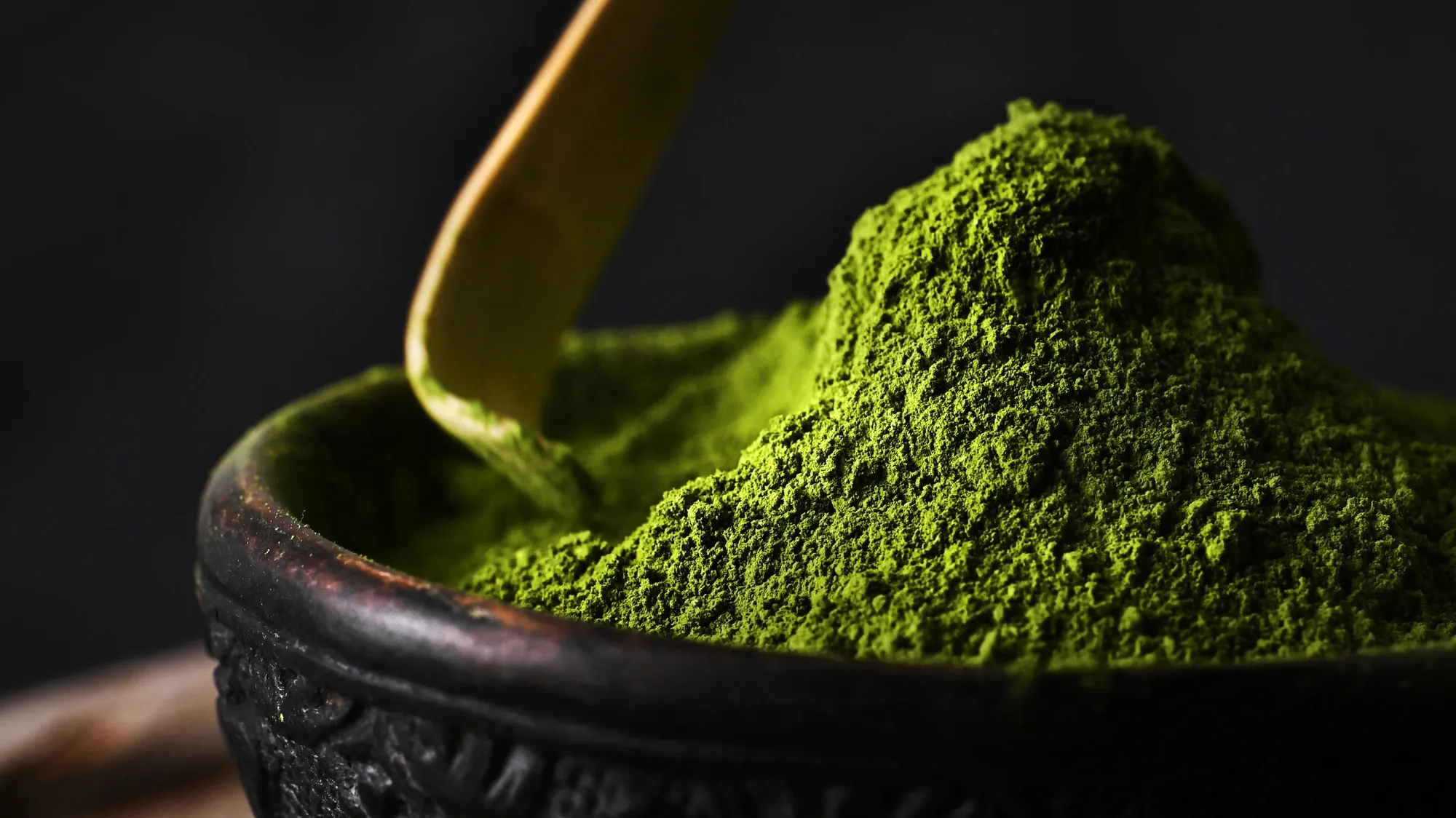
Matcha begins at the other end of the plant’s year: the first spring shoots, shaded for three to four weeks under cloth or reed canopies so that the leaf keeps its L-theanine and its chlorophyll, steamed, dried flat without rolling into tencha, destemmed, and ground to a powder of 5–20 microns on stone mills at a few tens of grams an hour. Nothing is roasted; the effort goes into keeping the leaf green. You whisk 2 g of the powder into 60–70 ml of water and drink all of it, which is why a small bowl is so concentrated in everything the leaf holds: about 64 mg of caffeine by Japan’s national food tables, 20–45 mg of theanine, about 200 mg of catechins.
In the cup
| Hojicha | Matcha | |
|---|---|---|
| Leaf | Later leaf and stems, roasted | First-harvest shaded leaf, unroasted, ground |
| Color | Reddish brown | Bright green |
| Aroma | Toast, caramel, roasted grain, a little smoke | Sweet, green, marine (the cover aroma) |
| Taste | Nutty, rounded, almost no bitterness or astringency | Umami, sweet, marine, clean bitterness |
| Texture | Clear, light | Thick, foamy, opaque |
| Form | Steeped (also sold as powder) | Whisked powder |
| Caffeine per cup | Low — an infusion of older leaf | About 64 mg per 2 g bowl (MEXT tables) |
| Tools | Pot and cup | Bowl, whisk, sieve |
| Water | Straight off the boil | 70–80°C |
| Time of day | Evening, with meals | Morning, on its own |
Caffeine, in the two cups
Matcha’s number is precise because it is the whole leaf: 32 mg per gram in Japan’s food composition tables, so about 64 mg in a 2 g bowl, in the range of an 8-ounce coffee. The tables are the Standard Tables of Food Composition in Japan, published by MEXT. Hojicha’s is low for three stacked reasons. The leaf is usually older — bancha and stems carry less caffeine than young spring shoots. The roast drives some of it off. And the cup is an infusion, so most of what remains stays in the leaf and goes in the compost; a cup of steeped sencha carries around 20 mg by the same tables, and hojicha from coarser leaf sits at or below that. The exact figure varies with the leaf and the steep, which is why makers rarely print one; what every Japanese household knows is that hojicha is the tea you can drink after dinner and matcha is not.
Texture and the tongue
The two teas feel as different as they taste. Hojicha is a clear infusion: light, clean, thin on the tongue, gone quickly, the way black coffee is. Matcha is a suspension: the powder itself is in the water, so the bowl is thick, foamy and almost creamy, coats the mouth, and lingers. This is why hojicha can be drunk by the pot through an evening and matcha is a single deliberate bowl, and why the hojicha latte and the matcha latte, though they sit on the same café menu, are different drinks: one is a roasted infusion with milk, the other is ground leaf with milk.
Hojicha powder, and the hojicha latte
Ground hojicha — roasted leaf milled fine — has become a café standard alongside matcha, because it makes a latte that tastes like dessert: toasted, caramel, faintly smoky, sweet with milk and sugar, and low in caffeine. It whisks or froths like matcha and makes a thinner, browner foam. Two things to know. It is not matcha, and no Japanese maker would call it that; it is roasted bancha or kukicha ground to powder, and its virtues are its own. And because it is the whole leaf in the cup, hojicha powder carries more caffeine than steeped hojicha — still less than matcha, since the leaf is older and roasted, but more than the evening pot. A hojicha latte is the better choice after four in the afternoon for most people; a hojicha latte at bedtime is still tea.
Making each at home
Hojicha. Warm the pot. Put in about 3 g of leaf — a heaped teaspoon, more if the leaf is bulky stems — per cup. Pour on water straight off the boil; hojicha, unlike every other green tea, wants it hot, because the roast has already removed the compounds that hot water would over-extract. Steep thirty seconds to a minute. Pour out completely. A second steep is fine and lighter. Cold-brewed overnight in the refrigerator, hojicha makes a smooth, caramel iced tea with almost no bitterness.
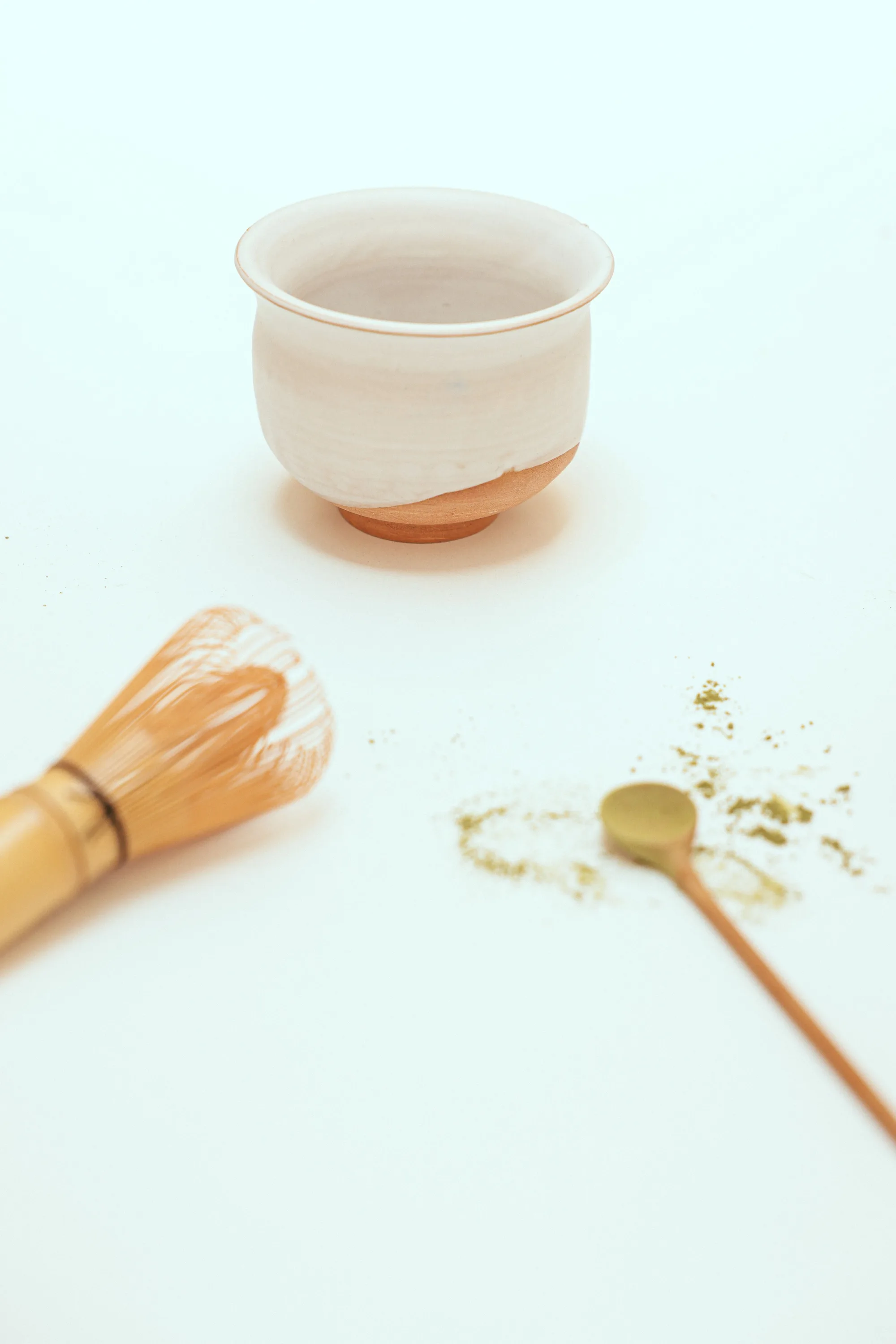
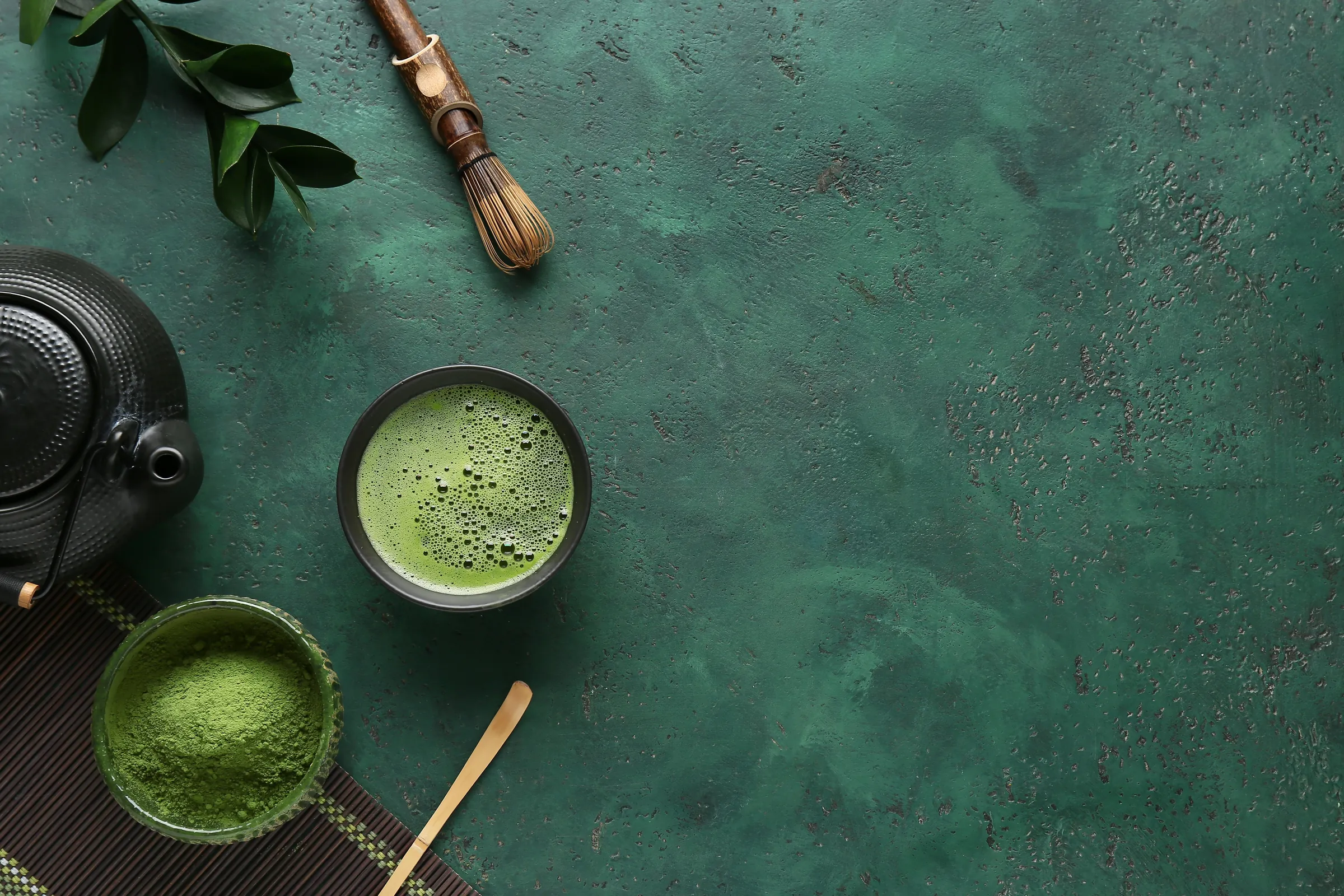
Matcha. Warm the bowl. Sift 2 g of powder. Add 60–70 ml of water at about 70–80°C. Whisk fast in a W pattern with a bamboo whisk for about fifteen seconds until the surface is a fine foam. Drink the whole bowl in a few sips. No second bowl from the same powder.
Hojicha latte. A teaspoon of hojicha powder in 30 ml of hot water, stirred smooth, then 150–200 ml of hot or cold milk; sweeten to taste. Or steep hojicha leaf strong — double the leaf, half the water — strain, and add milk.
Which one, when
Matcha for the deliberate bowl and the latte with body; hojicha for the pot after dinner, the tea that will not keep anyone awake, the latte that tastes like dessert. A workable day: a bowl of matcha at breakfast, when the coffee-range dose is welcome; sencha or nothing through the afternoon; hojicha with dinner and after. They are not competitors. They are the beginning and the end of the same day, and a household that drinks both is drinking the way Japanese households do.
Buying each
Hojicha is inexpensive and forgiving. Look for the leaf it was made from — kukicha (stems) for the sweetest and lightest, bancha for the classic, sencha for the finest — and for a roast date; roasted tea loses its aroma over months, so fresher is better, and a bag opened and resealed keeps for weeks without much loss. Kyoto houses sell it beside their matcha; Marukyu Koyamaen’s English shop lists several.
Matcha is expensive and perishable. Look for the five disclosures — use, harvest, region, cultivar, grower — and buy the size you will finish in a month. The shortage of 2024–2026 has rationed the famous Kyoto blends; hojicha has not been touched by it, which is one more reason it is the tea on every Japanese table.
What they share
Both are green teas, steamed to stop oxidation, from the same plant and often the same fields — the spring leaf goes to matcha, the summer leaf and the stems to hojicha, and a tea farm’s year contains both. Both are drunk without milk in Japan and with milk in cafés abroad. Both are best fresh. And both are cheaper and better bought from a maker who states what they are made from than from a tin that says only the name. The difference is what each was made to do: one to be the sweetest, greenest, most concentrated form of the leaf, the other to be the gentlest and most comfortable. Drink them for those reasons and the comparison mostly disappears into the hour of the day.
The roast, in detail
What roasting does to tea is worth understanding, because it is the entire difference between the two cups. Green tea leaf carries catechins (bitterness and astringency), amino acids (umami and sweetness), caffeine, chlorophyll (color), and hundreds of volatile aroma compounds. High heat changes each. The catechins partly break down and combine with other compounds, which is why hojicha is so low in astringency. The amino acids and sugars in the leaf react under heat — the same browning reactions that make bread crust and roasted coffee — producing the pyrazines and other compounds that smell of toast, nuts and caramel. Chlorophyll degrades, taking the green with it. And some caffeine is driven off, because caffeine sublimes at roasting temperatures, though how much depends on time and heat. What is left is a tea that has traded green tea’s sharpness and freshness for warmth and comfort, and that tolerates boiling water because there is little left for the water to over-extract. Matcha’s makers spend the whole process avoiding exactly this — steaming fast, drying gently, milling slowly to keep heat off the powder — because everything hojicha gains in the roast, matcha would lose.
Hojicha’s grades and styles
Hojicha has its own range, and since it is roasted rather than shaded, the range runs on different axes from matcha’s. Kukicha hojicha (roasted stems, sometimes called karigane hojicha or bocha) is the sweetest and lightest, with a delicate, almost vanilla note. Bancha hojicha is the classic: fuller, more roasted, the tea of Kyoto restaurants. Sencha hojicha uses better leaf and keeps a little of green tea’s body under the roast. Light roasts keep more of the leaf’s character; dark roasts push toward smoke and caramel. Kyoto is the traditional home and the Kyoto houses sell their hojicha under names as they do their matcha; Marukyu Koyamaen’s English shop lists a hojicha called Ogura Kaori beside its sencha and gyokuro. None of this has a “grade” in the English sense, either, and the roast level and base leaf are the things to read.
Pairing each with food
Hojicha is the tea with food: its low astringency does not fight fat or salt, its roasted notes sit beside rice, grilled fish and pickles, and it is why it is the default pour in Japanese restaurants. It also goes with sweets — a hojicha ice cream or pudding is a café standard — and with the end of a meal, where its warmth reads as digestive. Matcha is the tea before the sweet, not with the meal: a bowl of usucha is served after a small confection has been eaten, so the sweetness meets the bitterness, and it is not drunk alongside savory food in Japan. Put hojicha on the table and matcha in the quiet half-hour after it, and both are in their place.
A note on “hojicha vs matcha for health”
The comparison is asked often and the honest answer is short. Matcha carries far more of the compounds that green tea’s health literature is built on — catechins, theanine, caffeine — because it is the whole shaded leaf and hojicha is a roasted infusion with some of those compounds diminished by heat. If “more” is the criterion, matcha wins by a wide margin. Whether more of those compounds does more for a person is not settled by the trials that exist, most of which used extracts or amounts well above a bowl; and the large population studies that link green tea with good outcomes were studies of steeped tea drunk daily through the day, which is closer to a hojicha habit than to a bowl of matcha. Drink hojicha because it is gentle and pleasant in the evening; drink matcha because it is the leaf at its most concentrated; and let the health question be decided by what you actually enjoy drinking daily, since that is the only version of either tea that lasts.
Reading the two labels
A hojicha bag should say what leaf it was roasted from — 茎 or 棒 for stems, 番茶 for bancha, 煎茶 for sencha — and, ideally, a roast date; a roasted tea is at its best within months. “Hojicha powder” or 粉末ほうじ茶 is ground roasted leaf for lattes, and it should not carry the word matcha anywhere on it. A matcha tin should say tencha or shade-grown, first harvest, a use — koicha, usucha or cooking — and, at best, a cultivar and a grower; it should not say roasted, and if a tin says “roasted matcha” it is hojicha powder under a borrowed name. The two teas are honest about themselves on Japanese labels. The confusion, where it exists, was added in translation, and it is undone by two words — roasted, and tencha — one of which belongs on each and neither of which belongs on both. Read for those before the price, and the brown tea and the green one will each be exactly what they say.
Numbers at a glance
- Matcha, 2 g bowl: about 64 mg caffeine (MEXT tables, 32 mg/g); 20–45 mg theanine; about 200 mg catechins.
- Hojicha, one cup steeped: low caffeine — older leaf, roasted, infused; below steeped sencha’s roughly 20 mg.
- Hojicha powder: more than steeped hojicha, less than matcha; still an evening drink for most.
- Water: hojicha straight off the boil; matcha 70–80°C.
- Origin: matcha to Japan in 1191; hojicha named in Kyoto in the early twentieth century, by the usual account.
- Leaf: matcha from first-harvest shaded tencha; hojicha from bancha, kukicha or sencha, roasted.
- Foam: matcha, fine and stable from a bamboo whisk; hojicha powder, thin and brown; steeped hojicha, none.
- Shortage: the 2024–2026 rationing touched matcha, not hojicha.
Sources
- Marukyu Koyamaen — official site — Marukyu Koyamaen
- Standard Tables of Food Composition in Japan, 2020 (8th revised edition) — MEXT (Ministry of Education, Culture, Sports, Science and Technology) (2020)
Questions people actually ask
Does hojicha have less caffeine than matcha?
Yes, by a wide margin per cup. Hojicha is an infusion, often of older leaf and stems, so a cup carries a fraction of what the leaf held; a 2 g bowl of matcha delivers the whole leaf, about 64 mg. Japanese households serve hojicha in the evening for this reason. Exact figures vary with the leaf used and the steep.
Is hojicha a green tea?
Yes. It starts as steamed green tea — bancha, kukicha stems or sencha — and is roasted afterward. The roasting turns it brown and changes the flavor, but it is not fermented or oxidized like black tea.
Is there hojicha powder like matcha?
Yes. Ground hojicha is sold for lattes and baking and whisks like matcha, though it does not foam as well. It tastes of toast and caramel rather than umami and green, and it is not made from shaded tencha, so it is not matcha in any sense.
Which is healthier, hojicha or matcha?
Matcha contains far more of everything — catechins, theanine, caffeine — because you drink the whole shaded leaf; roasting also reduces some of hojicha's catechins. Whether that translates to a health difference in a person is not settled; most figures are per 100 g of powder or leaf, and a cup is a small fraction of that.
Can I drink hojicha before bed?
Many Japanese households do, and it is the traditional evening tea for that reason. It is not caffeine-free — no true tea is — so people who are very sensitive may still notice it. A cup at dinner is the custom; a bowl of matcha at dinner is not.
Does hojicha taste like coffee?
It shares the roasted, toasty, slightly smoky notes and a low bitterness, which is why a hojicha latte satisfies people who like coffee-shop drinks. It has none of coffee's acidity or body, and far less caffeine.
Which should a beginner buy first?
Hojicha is easier: a teaspoon of leaf, hot water straight off the boil, thirty seconds, no tools. Matcha needs a whisk, a sieve, a bowl and cooler water. If you want a tea to drink through the day, start with hojicha; if you want the bowl, start with a 100-tine whisk and a small tin.
Read next